
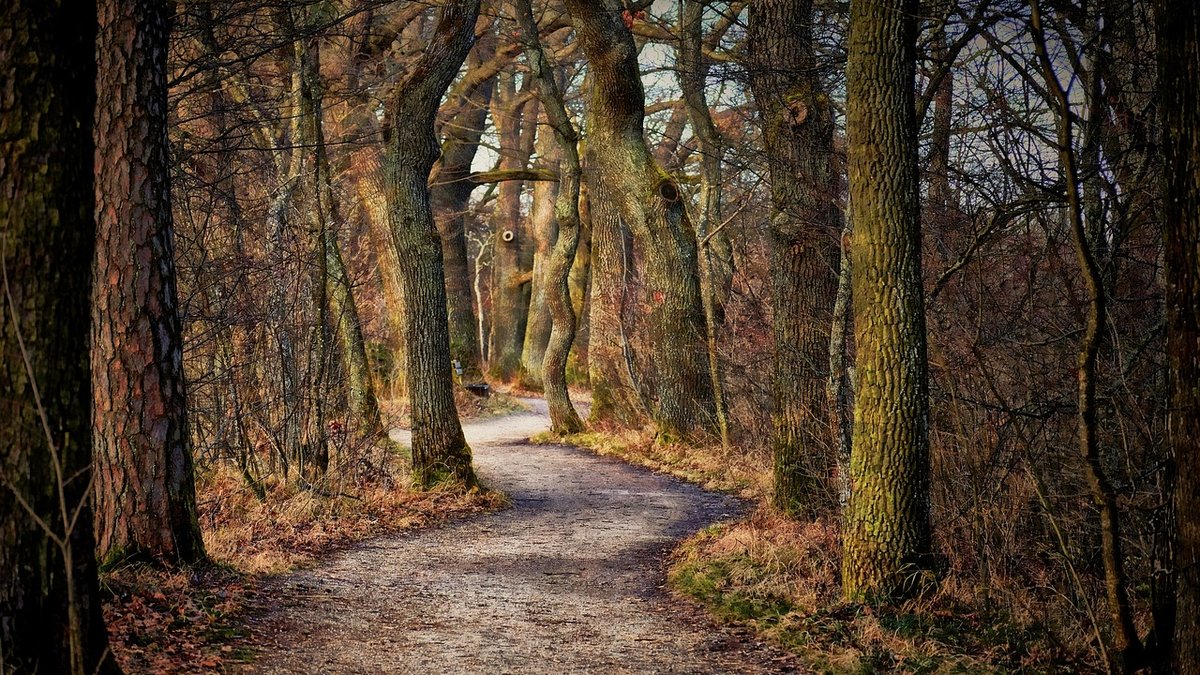
Most routes described as "easy" were graded with a brisk adult stride in mind, not a chassis loaded with a toddler, a changing bag and a bag of grapes. The practical test is simpler than any grading system: a firm surface, gentle gradients, and gaps wide enough for the handles to pass through without lifting. Get those three right and a two-hour ramble becomes a pleasure rather than an upper-body workout.
Firm is the crucial word. Well-drained towpaths, compacted gravel, tarmac and boardwalk all roll smoothly. Loose sand, churned mud, deep leaf litter and long grass are the enemies, because they swallow small wheels and turn a flat mile into a slog. Gradient matters just as much: a slope of one in twelve is fine downhill and quietly exhausting on the return leg, especially with a tired child leaning back.
Gaps are the detail people forget. A path can be perfect for two miles and then narrow to a squeeze between a hedge and a gatepost that demands a lift, a fold or a small argument. When you are planning, look for routes a metre or more wide at the tightest point.
Rivers and canals are wonderful for families because the ground beside them is usually level, the scenery changes constantly, and there is always something to point at — a heron, a lock, a moorhen skittering across the water. But not every bank is equal.
Ordnance Survey maps show the difference between a footpath and a bridleway, and bridleways are generally wider and less obstructed. Any route marked as a cycle path or a "shared use" trail is usually surfaced properly, which is a strong hint in your favour.
Pneumatic tyres handle gravel and packed earth far better than hard plastic ones, and a buggy with a fixed front wheel tracks straighter on uneven ground. If yours has a swivel wheel, locking it before a rough stretch stops the wobble that makes your wrists ache.
Pack lighter than you think you need. A heavy buggy is harder to push, harder to lift over a gate and much harder to turn on a narrow path. Take a compact rain cover rather than a full storm shield, a single water bottle each, and snacks that do not require two hands to open. A small rucksack slung on the handles is fine on the flat but destabilising on slopes, so wear it instead.
Dress children for mud, not for a photograph. Wellies with a decent grip, a waterproof over-trouser layer, and a spare pair of socks in the basket will rescue more afternoons than any amount of forward planning.
Traditional stiles are the single biggest barrier to buggy rambling, and no amount of enthusiasm gets a pushchair over a stone squeeze. Fortunately, the network is changing. Many routes now have gaps beside stiles, sometimes with a small wooden gate known as a "wicket", and bridle gates are wide enough for almost anything.
Where a route does include a stile, look for alternatives on the map rather than hoping for the best. A parallel bridleway or a short stretch of quiet lane often bypasses it entirely. Kissing gates vary enormously — some swing wide, others are tight enough to require a lift — so it pays to ask locally or read recent walk reports before committing.
Two adults make short work of almost any obstacle: one lifts the front wheels, the other steadies the back. On your own, a lightweight umbrella-fold buggy that can be carried one-handed is worth its weight in gold.
British riverside paths are at their best from late spring to early autumn, when the ground has dried out and the daylight lasts long enough for a leisurely pace. Winter walks are still lovely — bare trees open up the views and the water runs high and dramatic — but stick to surfaced towpaths and railway trails rather than meadow routes.
Start early. Buggy walks take roughly a third longer than the same distance on foot, and a toddler who has had lunch and a nap is a far better companion than one who is hungry and overtired. Aim to be back at the car before the afternoon slump, and build in a bench stop halfway for milk, biscuits and a bit of stone-throwing.
Begin with a there-and-back route of a mile or so on a surfaced towpath, and let the distance grow as you learn what your buggy and your family can handle. Note which surfaces you liked, where the tight spots were, and which car park had the easiest access, and you will quickly build a personal list of reliable local walks.
The rewards are worth the small effort of planning. A riverside path gives you moving water, wildlife, boats and bridges — endless entertainment for a small person strapped in and watching the world slide past. Choose your surface and your gaps carefully, and the countryside opens up to wheels as readily as it does to boots.

Hi, my name is Anthony kuber. I am artist and fashion designer.
I love to travel and writing blogging.
Your email address will not be published. Required fields are marked *
Software Developer & Writer
Hey, I'm Diva, a developer and writer blending code and creativity. I'm driven by a deep curiosity and a relentless pursuit of excellence. Join me as I craft digital solutions and captivating stories.


