
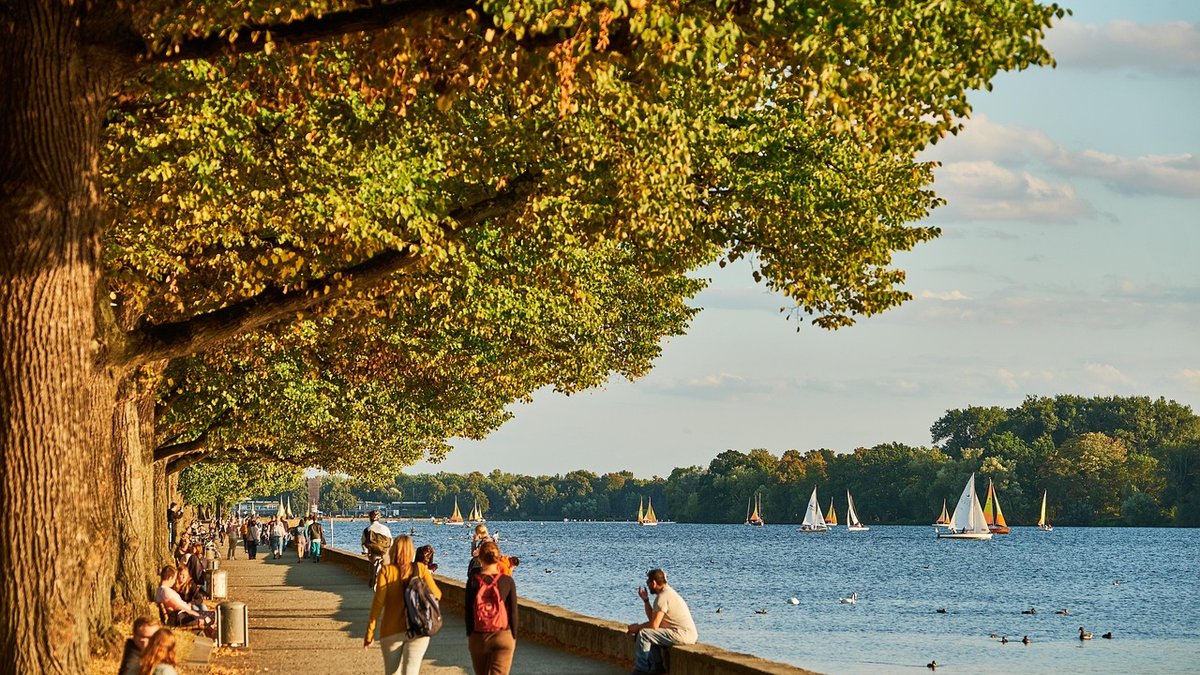
There is a particular kind of quiet that only exists beside water before eight o'clock. The river is running at its most honest then — no day boats, no paddleboarders, no one calling across the bank about where to stop for lunch. Mist sits in the hollows above the water, dew soaks the first few feet of path, and the whole corridor feels like it belongs to you and the heron.
Riverside walking also happens to be the most forgiving walking there is. Valley paths follow the water's own gradient, which means they are almost always level, gently graded, and kind to knees that have had enough of hill country. If you want a morning stroll rather than a route march, the bank of a river or canal is where you should be looking.
Aim to be walking by half past six in summer, or first light in winter. That gives you roughly ninety minutes of genuine calm before dog walkers arrive in numbers and the car park starts filling. If you can only manage one early start a week, make it a weekday — Saturday mornings by the water are a different, busier animal.
Before you set off, spend two minutes checking conditions. Riverside paths flood, and a stretch that was dry last month may be ankle-deep now.
Most good morning riverside walks fall into a few recognisable types, each with its own character and its own practical demands.
Pick a route with a loop rather than an out-and-back if you can. Turning around at a footbridge or a weir feels far more satisfying than retracing your steps, and it keeps the walk interesting when you are tired.
Riverside birdsong in the early morning is worth the alarm clock on its own. Song thrushes repeat their phrases from a high perch, blackcaps and chiffchaffs sing from willow scrub, and the low chuckling of moorhens carries a long way across still water. Listen for the sharp, bright call of a kingfisher before you look for the flash of blue — it usually gives you a second's warning.
Move slowly along the bank and you will see far more. Grey herons stand motionless in the shallows and will hold their ground if you keep a low profile. Look for otter spraints on flat stones under bridges, and for the muddy slide marks where they enter the water. Swans with cygnets deserve a wide berth, particularly in late spring, and a nesting mute swan on a narrow towpath can genuinely block your way — turn around rather than press past.
The reward for an early start is being first through the café door. Riverside cafés tend to open between eight and nine, and the difference between arriving at ten past eight and at half past nine is the difference between a quiet table overlooking the water and a queue out of the door.
Plan your route so the café lands at the end, not the middle — a stop halfway will cost you the calm you got up for. If the café does not open until later, time your walk to finish within fifteen minutes of opening. And if it is a warm morning, sit outside: the light on the water in the first hour after sunrise is the best it will be all day.
Carry a flask as a backup. A bench above a weir with your own coffee is a perfectly good substitute, and it means the walk is never dependent on someone else's opening hours.
Riverside paths are shared with anglers, cyclists, runners, and boaters, and early mornings are when all of them are at their most relaxed. Keep to one side where the path is narrow, step onto the grass to let a bike pass, and never walk between an angler and their float. Between mid-March and mid-June, give gravel spawning beds and bankside vegetation a wide berth.
Close every gate, take every piece of litter home, and keep dogs on a lead near livestock and nesting birds. Do that, and the early-morning river will keep giving you exactly what you came for: still water, birdsong, and a quiet path all the way to breakfast.

Hi, my name is Anthony kuber. I am artist and fashion designer.
I love to travel and writing blogging.
Your email address will not be published. Required fields are marked *
Software Developer & Writer
Hey, I'm Diva, a developer and writer blending code and creativity. I'm driven by a deep curiosity and a relentless pursuit of excellence. Join me as I craft digital solutions and captivating stories.


