
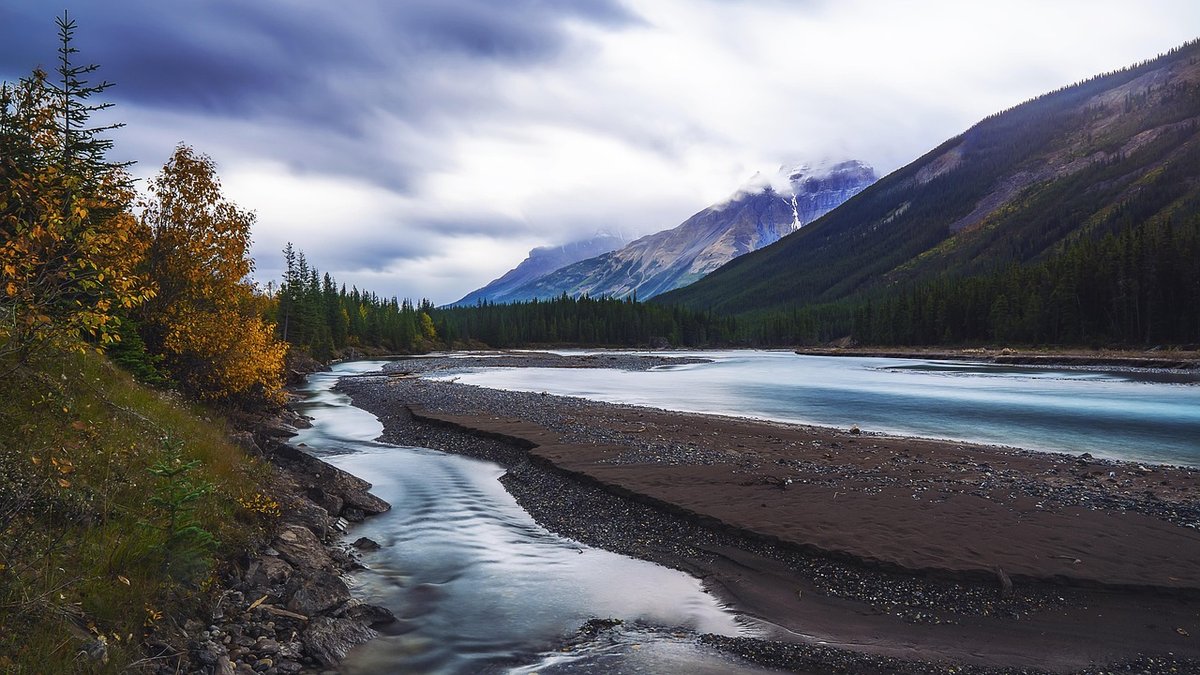
The River Otter rises in the Blackdown Hills near the Somerset–Devon border and runs for roughly twenty miles south to the sea at Budleigh Salterton. For much of that journey it slips through a shallow, well-wooded valley where the walking is genuinely kind: few punishing climbs, generous shade in summer, and a path that keeps the water within sight or earshot for long stretches.
That combination makes it ideal for anyone who wants a riverside walk rather than a fell-bagging expedition. The river is modest in width — you can often see clear to the gravel bed — which means whatever passes along it tends to pass close. A kingfisher isn't a distant speck here; it's a dart of colour a few feet away. And because the valley floor is largely flat, you can cover a decent distance without feeling you've earned a medal, leaving plenty of breath for conversation and a flask.
A lovely there-and-back section runs for around four miles from the village of Otterton down towards the outskirts of Budleigh Salterton, and it works equally well in either direction. Much of it follows the course of an old railway line, which explains the gentle gradients and the generous width of the path — a legacy that suits walkers, wheelchairs, buggies and dogs alike.
The surface is a mix of compacted gravel, earth and the occasional tarmac stretch. Underfoot it's generally firm, though after a wet Devon winter the riverside sections can turn genuinely muddy, so don't wear your best white trainers in February.
The Otter is one of the best rivers in southern England for spotting wildlife, partly because its valley is quiet and partly because the water is clean enough to support a proper food chain. Go slowly and keep your eyes on the shaded banks rather than the middle of the channel — that's where the action is.
Bring binoculars if you have them, but keep them in your bag for the first mile — you'll see more by simply walking quietly than by stopping every thirty yards to scan.
Rivers are at their most interesting where they turn. Every meander on the Otter creates a deep outer bank and a shallow inner one, and that difference shapes everything: gravel shoals where wagtails feed, undercut banks where otters holt, and the quiet backwaters where fish fry gather.
The willows deserve their own mention. Old pollarded trees lean out over the water at improbable angles, their trailing branches brushing the surface and creating dark, sheltered pools. These are the spots to linger at. Find a bend with a fallen trunk or a patch of flat grass above the water, settle down, and get the flask out. There's something about tea drunk beside a river that no café can replicate — the steam, the smell of damp leaf mould, the sound of water working over stones.
If you'd rather have a bench, the path has a few, typically positioned where the valley opens up and you can see two or three bends at once. Shelter from the wind is better on the wooded sections than on the open meadow stretches, so plan your break accordingly on a blustery day.
Each season offers something different. Spring brings the valley alive with birdsong and fresh, pale-green leaves. Summer is lush and shaded, though the nettles along the margins grow tall and shorts are a gamble. Autumn is arguably the finest time: low golden light, mist over the water in the early morning, and fewer people about. Winter gives you bare branches — which means you can actually see the birds — and the best chance of spotting otters in daylight, but the mud is at its worst.
If four miles isn't enough, the route links naturally onwards to Budleigh Salterton, where the river meets the sea and you can pick up the South West Coast Path for a cliff-top loop back. Alternatively, wander inland from Otterton towards the village of Colaton Raleigh for a change of scene and a few more miles of quiet lanes.
Whichever you choose, the principle stays the same: walk slowly, stop often, and let the river set the pace. The Otter rewards patience far more than distance.

Hi, my name is Anthony kuber. I am artist and fashion designer.
I love to travel and writing blogging.
Your email address will not be published. Required fields are marked *
Software Developer & Writer
Hey, I'm Diva, a developer and writer blending code and creativity. I'm driven by a deep curiosity and a relentless pursuit of excellence. Join me as I craft digital solutions and captivating stories.


